By Reagan Claggett
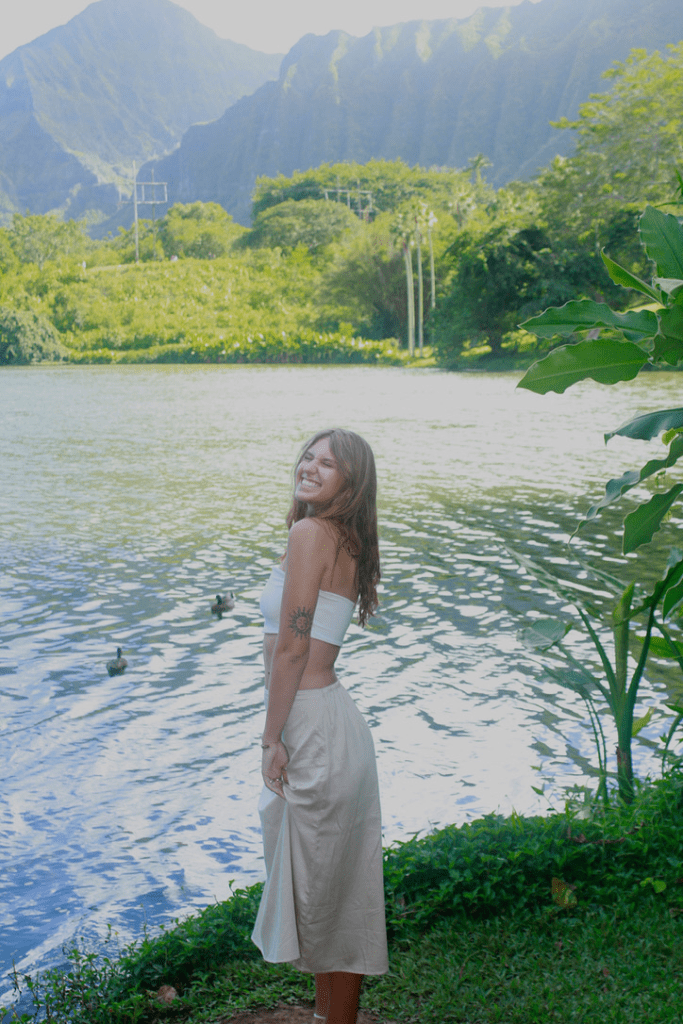
Hello! My name is Reagan Claggett, and I am originally from Denver, Colorado. I am currently a third-year undergraduate student at the University of Hawai’i at Mānoa pursuing a Bachelor of Science in Biology, with a strong interest in sustainability and conservation. Outside of my academics, I enjoy traveling, hiking, reading, and spending time with friends. My passion for environmental sustainability stems from a lifelong connection to nature and a deep desire to protect the planet for future generations. In 2023, I had a unique opportunity to work at a sea turtle conservation center in Ostional, Costa Rica.
This experience taught me how to communicate across cultures, navigate new environments, and connect with people from diverse backgrounds. This project was my first experience in environmental conservation abroad and sparked a deeper interest in global sustainability. Being a part of the balance between the local communities and their environment largely inspired me to dedicate my life to protecting natural ecosystems and promoting sustainable practices. Now, I serve on the executive board of the Surfrider Foundation’s UH Mānoa chapter, where I help organize beach cleanups, educational workshops, and climate advocacy events. Our goal is to engage students and the wider community in hands-on environmental stewardship and to promote local sustainable practices. In the future, I aim to continue working on projects that create accessible and effective solutions for environmental challenges.
Although many of my sustainability efforts happen outside of formal classes, my academic experience at UH Mānoa has provided a strong foundation for exploring these interests more deeply. As part of this journey, I will be spending the summer in Seville, Spain, where I’ll be taking Spanish language and cultural courses alongside conducting independent research.
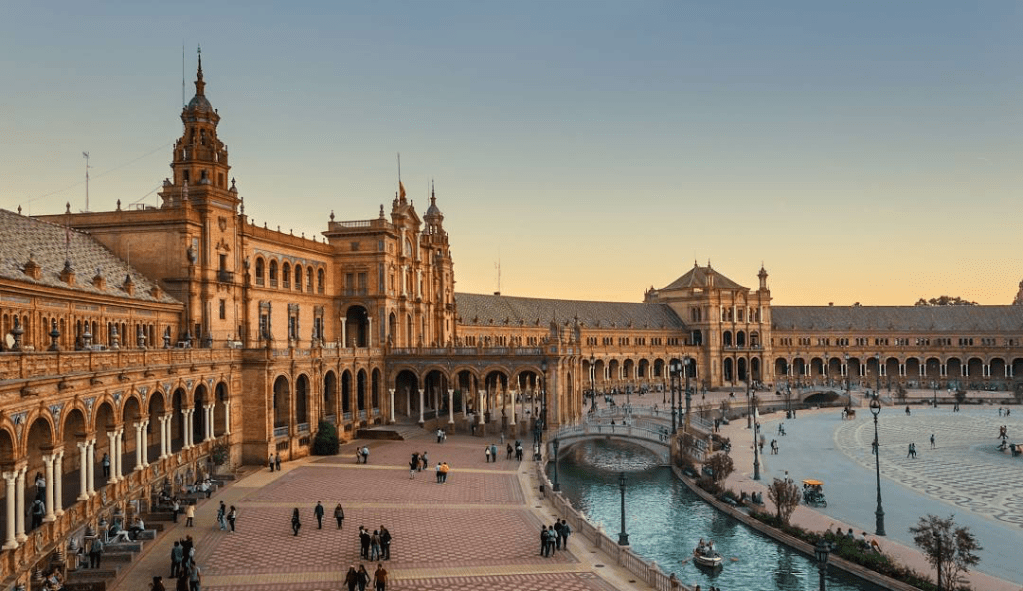
Plaza de España in Sevilla. Photo by Carlos Delgado (Kadellar).
The consequences of human environmental impact are becoming increasingly severe, causing significant damage to our air, oceans, and ecosystems worldwide. Weather patterns are shifting, and natural disasters are growing more unpredictable. Spain is no exception, with a sharp increase in floods and heat waves in recent years. Southern Spain has experienced heat waves so intense they are now classified on a scale similar to hurricanes or tornadoes. These heat waves pose a serious threat to infrastructure, human life, agriculture, and ecosystems. As climate change continues to devastate the environment, taking action is imperative. Spain has introduced several climate action policies, including a promise to reduce greenhouse gas emissions by 55% and achieve carbon neutrality by 2050 (International Trade Administration, 2024). While institutional policies and proposals are a promising start, it is ultimately the community and individuals who must drive meaningful change. This idea inspired my project, titled “Community Response to Climate Change in Seville, Spain”.
This cross-cultural research project explores how local communities in Spain respond to climate change through sustainable practices, cultural traditions, and grassroots initiatives. The main goal is to document and understand how everyday community actions contribute to broader Plaza de España in Sevilla. Photo by Carlos Delgado (Kadellar). sustainability and climate resilience efforts. Through interviews, conversations, and field observations, I hope to learn how people engage with climate issues in daily life: What do they know? What changes have they noticed? How do they take action? And how do their local values and social structures support (or hinder) sustainable behavior?
In comparing the perspectives and practices in Seville with those in Hawai’i, I hope to highlight the cultural and social dimensions of climate literacy and identify community-based strategies that can be shared and adopted across regions. While global policies are essential, many environmental improvements start at the local level, making it important to study how communities can take action on their own. Upon completion, my findings will be organized and reviewed, and a final report will be produced. This report will be presented at the University of Hawai’i at Mānoa to students, faculty, and community leaders in O’ahu to encourage and improve local sustainability practices.
As I embark on this research journey, I’m excited for the opportunity to improve my Spanish and immerse myself fully in a new cultural environment. Seville is a vibrant city with a rich history, and I look forward to learning not only from my academic experiences but also through daily interactions, shared meals, and community life. I am looking forward to exploring the city, experiencing local traditions, and learning as much as I can from the culture and people around me.
While I am eager to begin, I am also aware of the challenges ahead, particularly in building initial connections for interviews. Since I will be arriving without an established network, and I have a short window to organize and conduct the interviews, establishing trust and finding willing participants quickly will be essential.
To make the most of my time in Spain, I plan to be proactive and intentional in forming relationships with my host family, housemates, local organizations, the International College of Seville staff, and community members. I see every conversation as a potential learning moment, and I hope to approach this experience with humility, curiosity, and openness.
More Information: International Trade Administration. (2024, August 19). Spain – Green technologies. U.S. Department of Commerce. https://www.trade.gov/country-commercial-guides/spain-green-technologies.

