By Eva Asfahani
Hi! I’m Eva Asfahani, a student from El Paso, Texas, so far west it’s actually in a different time zone than most of the state. I’m currently studying Environmental Science (Biology concentration) with a minor in Global Business Sustainability at The University of Texas at Austin. Although a long title, it combines two of my academic interests: understanding the environment through science and learning how global systems, especially businesses, can work with the environment instead of against it.
Outside of class, I keep myself busy as a freelance photographer, mostly capturing urban landscapes and graduation portraits. I also have been running for several years, having just finished my first marathon in Prague earlier this year. Running became a constant during my semester abroad, providing a layer of stability in a new place. Wherever I was, heading out for a run helped me see each city in a more intimate, unexpected way.
This spring, I had the chance to spend several months in Lisbon, Portugal, where I focused my research on a topic that blends my passions for sustainability, infrastructure, and the ways cities adapt to environmental challenges: urban water drainage.
My Project: Lisbon’s Drainage Modernization
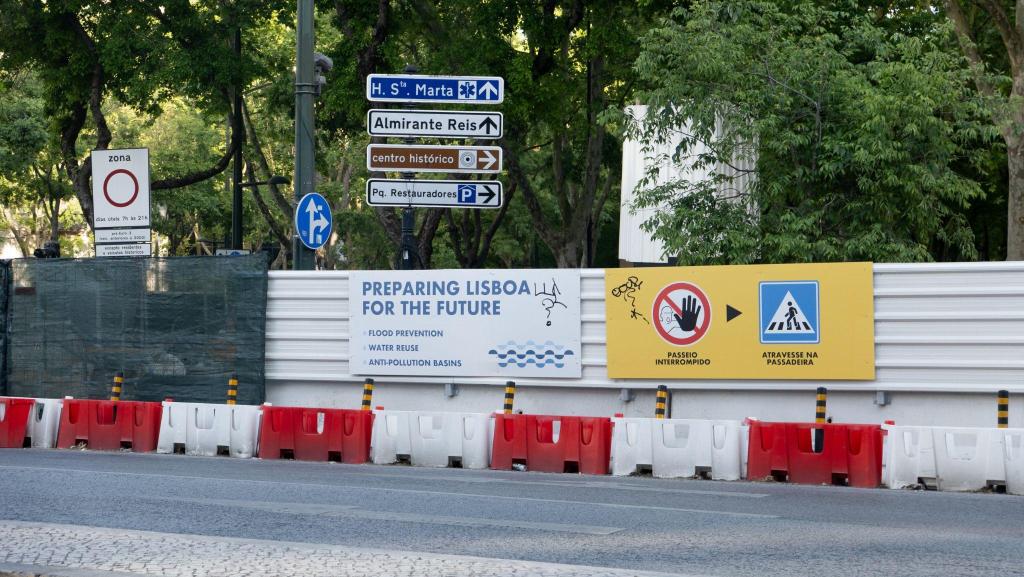
Lisbon has historically faced flooding issues. The city’s aging infrastructure and hilly terrain make it vulnerable, especially with increasingly intense rainfall events due to climate change. To combat this, the city launched a 14-year modernization effort in 2016 known as the Plano Geral de Drenagem de Lisboa, or Lisbon’s General Drainage Plan.
This plan combines traditional “gray” infrastructure (including all concrete and traditional infrastructure) with Green-Blue Infrastructure (GBI), an approach that integrates green spaces and water features to absorb and manage runoff more naturally. My research focused specifically on how this plan is being applied in Avenida da Liberdade, one of Lisbon’s most commercial and densely built neighborhoods.
Research Question: How can the implementation of green spaces and sustainable development supplement Lisbon’s urban drainage in the Avenida da Liberdade area?
While I originally expected to take field measurements and collect on-the-ground data, the reality of the project turned out to be more qualitative, which ended up being a surprising advantage. I spent most of my time exploring literature, city reports, and interviewing municipal engineers and planners involved with the drainage plan. These conversations gave me a richer understanding of the political, social, and financial complexities behind seemingly simple changes like adding a rain garden or permeable pavement.
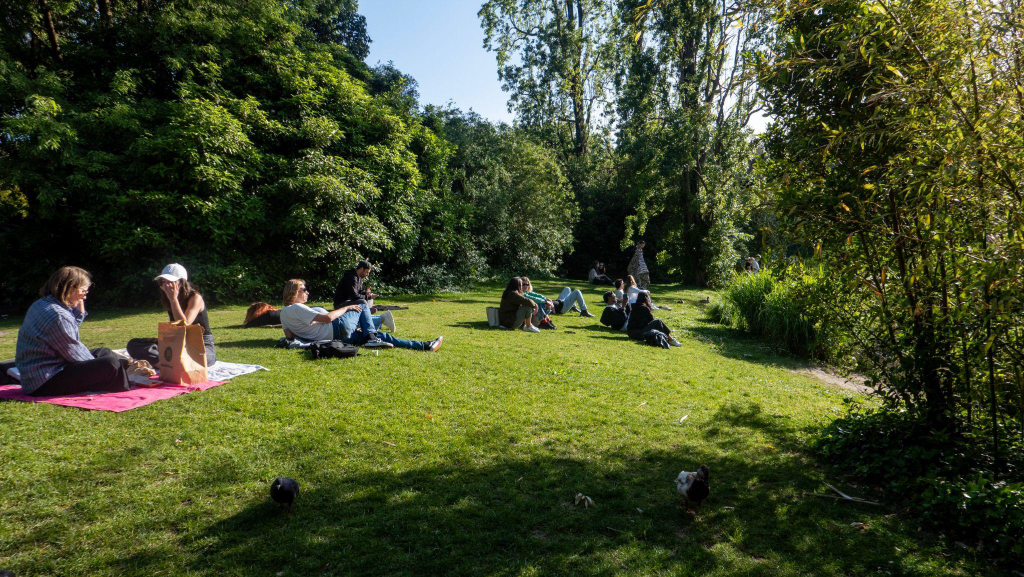
If you’re unfamiliar with Green-Blue Infrastructure, here’s a quick example: instead of paving over a sidewalk, a city might plant a bioswale, or a long, narrow trench filled with plants that filter and absorb water during storms. It’s beautiful, functional, and far more sustainable than a gutter and pipe alone.
Beyond Lisbon: Running, Wandering, Learning
Research was just one part of the experience. My time abroad also became an adventure of travel, running routes, and cultural immersion. Over the semester, I visited Portugal, Sweden, Denmark, the Czech Republic, France, Spain, Morocco, Egypt, and Jordan. In each country, I made the most of each experience by researching each history, local cuisine, and must-sees. Running gave me a personal way to experience each place. Marathon training doesn’t pause when you travel, so I ended up running through parks in Copenhagen, across ancient stone streets in Prague, and along islands in Stockholm.
Each country offered a new perspective on how history, design, and nature collide. From the arid systems of North Africa to the rain-heavy strategies in Northern Europe, I left with a more global sense of what it means for cities to adapt.
A Shift Toward Urban Planning
One unexpected outcome of this project was how much it nudged me toward urban planning. My father is an architect, and growing up, he was always pointing out interesting city features, whether it was about the surface area of a building or how a street corner was designed to manage foot traffic. My mother has an artistic brain, always pointing out the beauty in human interaction in every place we visit. I think those observations stuck with me more than I realized. Now, I find myself gravitating toward the urban environment, but in my own way, through research, and sustainability. I’d love to bring that focus into my future career, combining water research with planning that helps cities grow more responsibly and beautifully, especially in the face of climate change.
Reflections and What’s Next
Looking back, I’m grateful not only for the research experience, but for the personal growth that came with it. I learned to be more adaptable, both in terms of my research approach and my day-to-day life. I learned to ask better questions, even in unfamiliar languages. And most of all, I learned that cities are living systems, shaped as much by people and politics as by blueprints and budgets.
I would highly suggest studying abroad for any experience you might be searching for. Getting out of your comfort zone, even physically, may teach you things you never knew you could learn. I am grateful for everyone that I met through this experience that pushed me to do awesome and ridiculous things.


 HSF House Blogs