Hello readers! My name is Amber Losciale, and I am a third-year Cyber-Criminology major. I am incredibly passionate about my major and career trajectory, with many of my academic and occupational goals particularly aligning for a future combatting Internet crimes against children. I am unsure if I watched too much of ‘How to Catch a Pretador’ in middle school, but I have known this is the area of criminal justice I have wanted to work in for quite some time. I started as an intelligence analyst volunteer at my small town Citrus County Sheriff’s Office where I would analyze data on sex offenders in the area and enter them into the FDLE database. From there, I began working as a crime analyst volunteer at the Tallahassee Police Department. I utilized geographic information system software and built link charts of violent offenders in the Tallahassee area. Now, I work as a data scientist in the Research Administration Planning and Innovation Division with the Leon County Sheriff’s Office. My current supervisor is a previous professor, Dr. Dixie Rocker, whom I adore. I am very fortunate to get to work there; it is such an excellent and fulfilling opportunity.
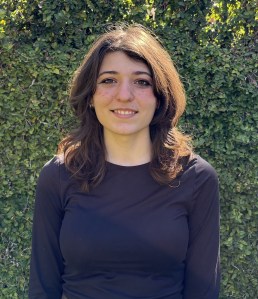
Aside from this, as a first-generation CARE college student, I work two other jobs to support myself. The other two jobs are as a FSU Housing & Residential Life desk assistant and an information technology specialist at FSU College of Music. The latter is very special to me since I have a deep passion for music. I have performed as an alto saxophonist with the Marching Chiefs for the past few years! I absolutely loved it. It has allowed me to play in New Orleans, Miami, Orlando, Charlotte, and Ireland! Though I am no longer involved due to the extensive time commitment, I continue to practice and perform with the local Capital City Tallahassee Community Band.

That being said, my project is quite different from my prior academic pursuits or interests! Our working project title is “Unmanned Aircraft Assessors,” and we aim to develop a strong prototype that would evaluate building damage using aerial imagery from drones. Based on my self-introduction, this can sound a bit left field, but allow me to give context! During the mid-fall semester, a hackathon entitled Hack Disaster was initiated between Florida State University and the University of Kyiv in Ukraine. From there, those who pted into the program were randomly placed into teams between the two schools, which is how I met my awesome IDEA grant teammate, Jas Chawla! The reason I applied to participate in this Hackathon was that I had just recently joined FSU’s Emergency Management and Homeland Security Certificate Program (EMHS). Though it was outside the cyber-criminology field, I love public service, regardless of the line of work. I have a mindset that if, after graduation, I am going to work a job for the remainder of my life, I want whatever it is I am doing to be meaningful and elicit real positive change.

In any case, this project is a continuation of the work we did for Hack Disaster. This competition took place over only four days, so while we developed prototypes for deep learning models that would assess building damage, our team faced obstacles due to time constraints. With this IDEA grant, we now have the time and funding necessary to purchase computational resources for the rigorous model training needed to improve our prototype accuracy. As stated previously, not only are we aspiring to build software, but we are also applying it to unmanned aircraft systems, ultimately creating safer environments for first responders in a disaster setting.

I was approached to continue my work following the hackathon by my professor and research mentor for this project, David Merrick, the director of the EMHS program. He saw potential in my team’s prototype, illustrating a gap in research with this type of technology failing to document and perform proper field tests for real-world application. Work like this is very critical to the field, as natural and man-made disasters are increasing both in frequency and severity, necessitating rapid, affordable, and accurate assessments for impacted areas to deploy aid efficiently. With this, current post-disaster evaluations are held back by manual inspections, limiting recovery speed. I am excited to dedicate myself to this project over the summer. With the IDEA Grant enabling our success, I believe we can go far with this. Possibly in the form of a patented product, taking it to the 22nd Pacific Rim International Conference on Artificial Intelligence, or writing and publishing a research paper. I cannot wait to see where this takes me, and for those of you reading, I am grateful to have you along this journey with me!

 HSF House Blogs