Hello all! My name is Connor Krassel, I am a Junior Biological Sciences major here at FSU. I plan on graduating with my bachelor’s degree and going onto medical school, currently interested in becoming a cardiologist. The science surrounding the field of cardiology has become a passion of mine in recent years following my experience in the Hickner laboratory along with gaining a better understanding of the need for quality cardiovascular care in the diverse communities across the United States. I got involved in research through the Undergraduate Research Opportunities Program (UROP) at FSU and have continued working in the lab past my time in UROP. I have been a clinical research assistant in the Hickner laboratory for a little less than two years now, where I have gained a much deeper appreciation for the discipline of physiological research. From this time, I have grown a better understanding of the dynamic interplay our body has with its surroundings and found it to be a great way to get academically involved at FSU, but also to meet many like minded people with similar goals to mine. Along with that, getting to talk with participants and converse with knowledgeable researchers on topics of health affecting communities today, I have gained a profound curiosity for new areas of research to explore and a renewed passion to pursue medicine in the future. I am very excited to be participating in the IDEA Grants Program this year and look forward to working with John and Sequoia on our project!
Hello everyone, my name is John DeCaro and I am currently finishing up my junior year of my bachelor’s degree in Biomedical Sciences. Upon completing my undergraduate degree, I hope to attend medical school and become a practicing physician. At the moment, although subject to change, I am interested in pursuing pediatrics or another general primary care specialty, as these disciplines get to view and treat the body as a whole, rather than a specific aspect of the body. My research experience at FSU has been very impactful in my effort to achieve this goal. I became involved in Dr. Hickner’s integrative vascular and metabolic physiology lab through FSU’s Undergraduate Research Opportunity Program (UROP) nearly 2 years ago, and the studies conducted in this lab have been extremely interesting and applicable to the medical field. Seeing what goes on “behind the scenes” in our bodies has been very helpful to my understanding of human health. Additionally, my experience in this clinical research lab has opened my eyes as to how new treatments and preventative measures are found and tested in the health field.

Hi! My name is Sequoia Ernst, I am a sophomore majoring in Exercise Physiology. Since it’s my first blog post, I want to talk a little bit more about my background and goals. My whole family is from Tallahassee and I grew up here. Growing up I didn’t think I was going to go to university but I took some classes at Tallahassee Community College in high school and that helped to build my academic confidence. I didn’t feel ready to move away from my family and friends for university so I decided to stay local and go to FSU. I’m happy I made this decision and I’ve really enjoyed my time here so far. I started as a biology major but I felt like the courses I needed to take were not related to my interests. I had no interest in courses like plant physiology, evolution, and ecology. I learned about FSU’s exercise physiology program, felt that it fit me much better, and switched to it.

Even after I narrowed what I wanted to learn about down to exercise physiology, I’ve had a hard time determining what kind of career path I want to work toward. I’ve thought about becoming a strength coach, physical therapist, physician assistant, researcher, or dietitian. Now, I’m leaning pretty heavily toward continuing in academia and going into research. My career goal shifting toward research happened because of Dr. Hickner’s lab. Additionally, another researcher in the lab that has served as one of my research mentors–Dr. Paul Baker–has been especially encouraging and helpful. He’s helped me see research as a viable career path for me. I’ve also had encouragement from some other professors in the past which has been another reason I’m leaning toward research. I’m excited to be doing this project as a step toward that future. We’ll be making new blog posts throughout our process of working on it!
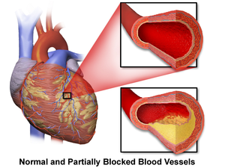
In our project, we’ll be expanding upon previous work done in Dr. Hickner’s lab. Cardiovascular disease is the number one cause of death in the United States, and a common theme among individuals with cardiovascular disease is elevated levels of reactive oxygen species (ROS), which is an umbrella term that classifies a type of molecule that may be harmful to the body. This is due to the phenomenon of oxidative stress, and it has been suggested in literature that oxidative damage may be a contributor to cardiovascular disease. These harmful ROS molecules are produced in our bodies in several ways, but a large portion of it is produced by an enzyme called the NOX enzyme.
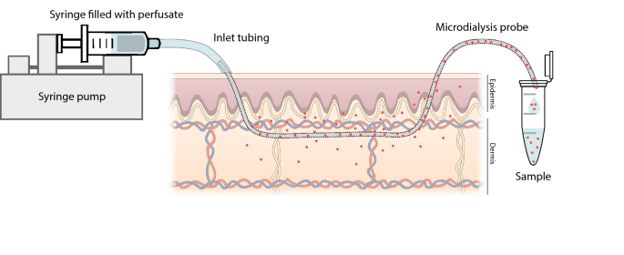
By blocking the activity of this enzyme using pharmaceutical agents (and therefore lowering ROS levels), we can compare someone’s vascular health both with and without high ROS levels. We will assess this using a technique called microdialysis, which is a technique rather unique to Dr. Hickner’s lab, as it is only practiced in a handful of labs across the country. Using this technique, participants’ rate of blood flow can be directly measured. Thus, we predict that participants will exhibit increased blood flow when ROS levels are lowered. The findings of this study can help improve the understanding of this potential cause of cardiovascular disease. A better understanding of the underlying causes of the disease is important in order to continue to develop better ways of prevention and treatment of the number one cause of death in the U.S.
 HSF House Blogs