I’m Cody and I’m a rising junior at Florida State University. I am majoring in Civil & Environmental Engineering, and I am conducting an IDEA Grant project over this summer. As a child growing up in San Diego, CA, I loved boogie boarding at the cliff-backed beaches or hiking up the mountains near our house. After moving to Jacksonville, FL when I was in high school, I enjoyed visiting places like the Guana River Reserve. I also grew more aware of the environmental issues facing Florida as transplants (like my family) inundated it, such as habitat loss, saltwater intrusion, and algae blooms. I decided to study Civil & Environmental Engineering at Florida State University to pursue a career where I can better intertwine the human world with the natural world.

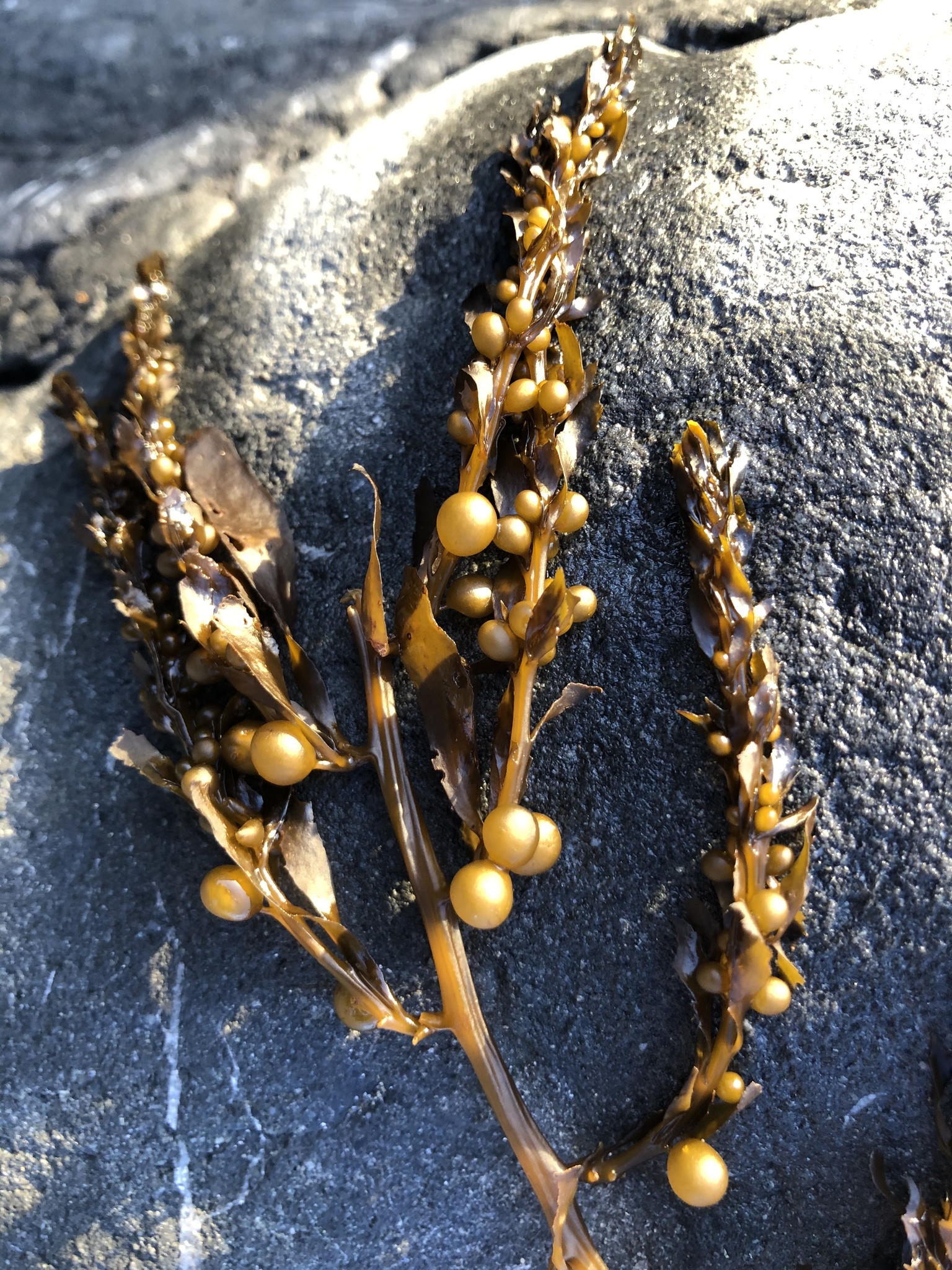
After enrolling at FSU, I joined the Environmental Service Program, where I have participated in projects like garden and habitat restoration, beach cleanups, and other community outreach. I found out through this service about the invasive species of algae Sargassum muticum, or Japanese wireweed. This experience motivated me to find ways we could put the algae to good use.
Over the current Fall 2023-Spring 2024 school year, I am a member of the Undergraduate Research Opportunity Program (UROP), where my group is exploring how two species of algae (Agardhiella subulata and Sargassum muticum; the latter invasive in Florida) could sustainably improve the flexural and compressive strength of clay bricks. These algae contain cellulose fibers that, at the microscopic level, can help hold the bricks’ particles together. This project is in progress as of writing. However, while writing my literature review for the project, I encountered an additional research topic to explore over this summer with the IDEA Grant, under the supervision of Dr. Qian Zhang: how to strengthen permeable concrete with an invasive species of algae.
Permeable concrete consists of an aggregate (pebble-like chunks of stone with gaps between them) held together with cement that allows water and other liquids to drain through. Flood and hydroplaning-prone areas like highways, airports, and parking lots would benefit greatly from this ability. Unfortunately, the permeable concrete’s key limitation is that it is less durable than solid concrete. It is prone to damage from compression, like a plane touching down, or from flexural stresses, like those caused by an earthquake.
However, one study found that adding cellulose fibers to the cement mixture in permeable concrete can improve the flexural and compressive strength of permeable concrete. While our study will use whole Sargassum instead of only its fibers (as extracting these fibers will require lab equipment and materials outside the scope of civil engineering), whole algae has proven to be an effective addition to solid concrete, and observation that could extend to the cement. Additionally, the fibers found in algae are generally longer and more intricate than standard commercial cellulose fibers.
At the moment (early April), I am in the planning stages of the project. While this research falls in a relatively niche field of research, it still tackles two important areas: utilizing excessive invasive S. muticum and sustainably improving permeable concrete. Even if positive results are not guaranteed (like in any scientific endeavor), this project will nonetheless grow knowledge in this burgeoning area, since there are no prior studies I can find that incorporate algae in permeable concrete.
My current goals at FSU are to complete my ongoing UROP project and submit for a publication in May or June, and to complete my IDEA Grant project in August. I will finish my bachelor’s degree by the Spring 2025 semester, and from there I will either complete the combined B.S. – M.Eng. program at the engineering school, or enter private or public employment in professional engineering, ideally with a renewable context.
Header image provided by Wikimedia.
 HSF House Blogs
