****Before starting my post, I want to give a warning that this content is centered around atrocities that happened during the Holocaust. ****
To provide background, Theresienstadt, or otherwise called Terezin, was a former transit camp intended for Jews during the Holocaust. Lidice was a small Czech town that was the site of a total massacre by nazis in 1942, with buildings burnt to the ground and residents murdered.
I honestly struggled to process Lidice. Since my first impression of it was a view of a memorial park with small rolling hills, I cannot come to terms that it was once a town. Walking through, I tried my best to envision the homes or businesses of the people, but my mind just drew a blank. Looking at pictures only made me connect it to another area. Seeing the statue of the children I think evoked the most emotion out of me there. I was surprised that this is the only stature dedicated to the child victims of the Holocaust.

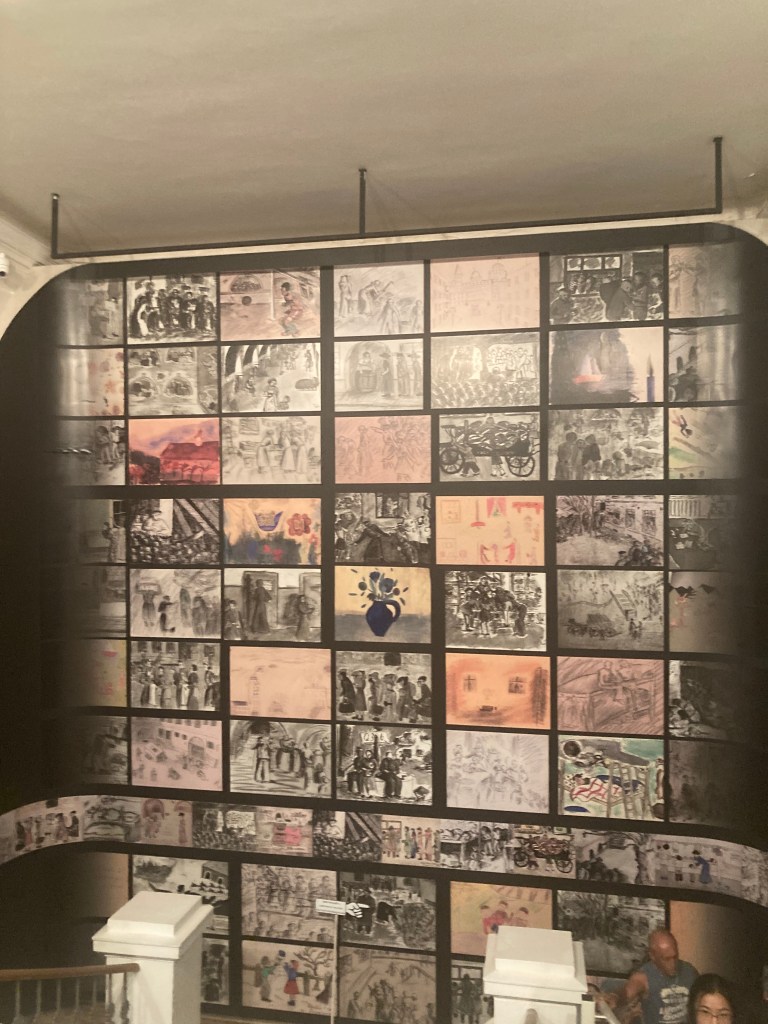
Moving on to Terezin, I felt a sense of eeriness there.. I had the same feeling of uneasiness that I had when I visited Auschwitz, but something about the continued inhabitance of Terezin seemed interesting to me. At first, I wondered, “Why would anyone want to live here?” But as the tour proceeded and we learnt more about the endurance of the Jews and their contributions towards making it a place full of arts, I can understand feeling a need to continue the legacy of the people who once lived there and, acknowledge the fact that that town is not only defined by the once being a Ghetto. I think this is an important lesson because it shows that a place is not only defined by atrocities that happened and, its narrative is in the control of the people who care about it. The tour guide highlighted a young boy who was really educated. The fact that he knew about Gandhi despite having no access to books, phone shows that education prevailed in the camp, and the creatives did not give up their passions. I loved that they displayed all the compositions made by musicians and poetry written as it showed more of the personalities and the humanity in the past inhabitants. One thing that was new to me was that there was an area in Auschwitz dedicated to Czech prisoners who would were forced to aid in spreading propaganda to people in Terezin telling them how glorious life was like in Auschwitz even though this clearly was not the case. This is interesting because it honestly seems pointless to me. The people in the Ghettos had no choice but to go to the camps if they were chosen for a selection, so this just shows the level of sadism by deluding them into thinking there was a better life awaiting them, instead of simply keeping them in the unknown.
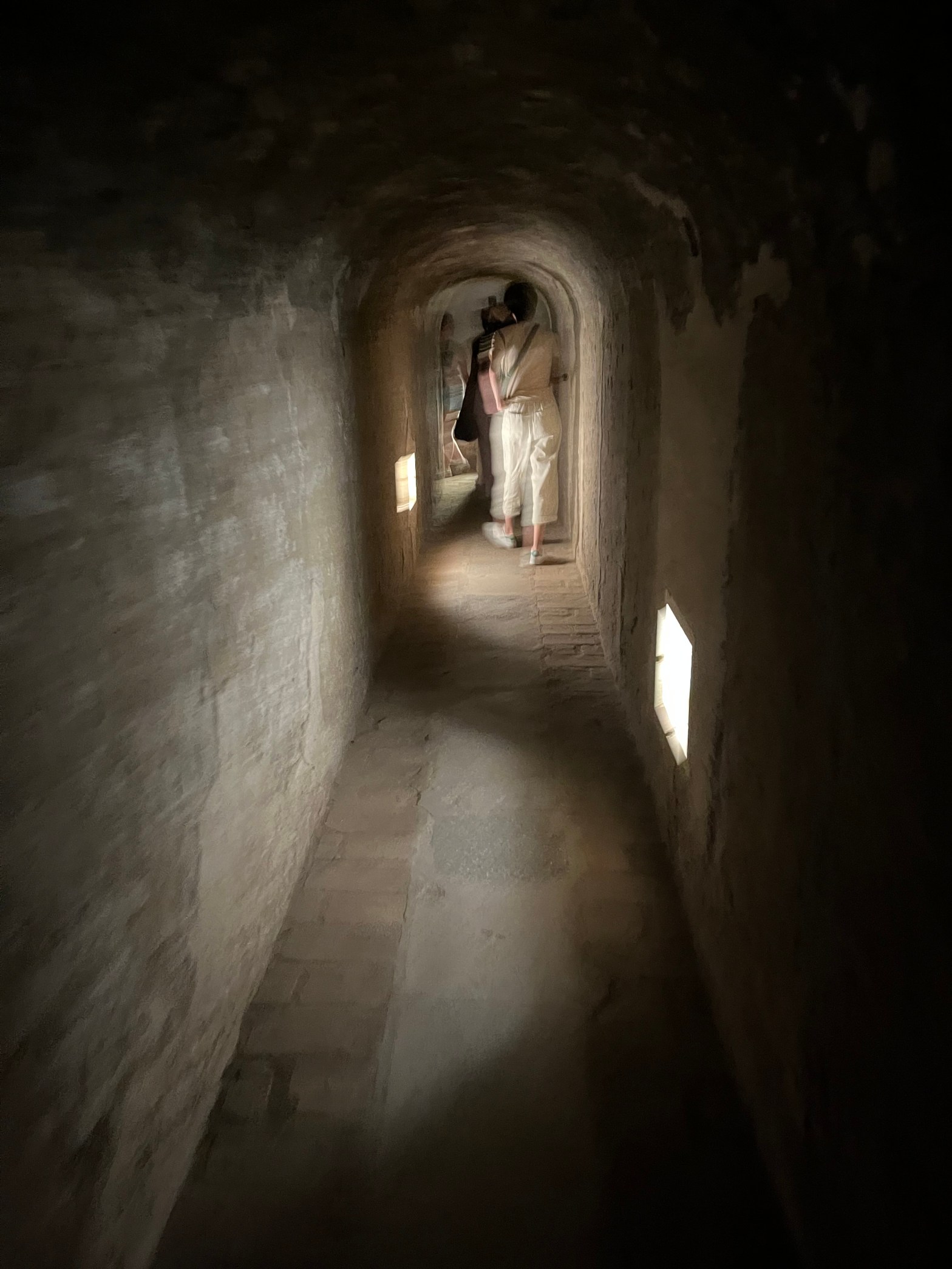
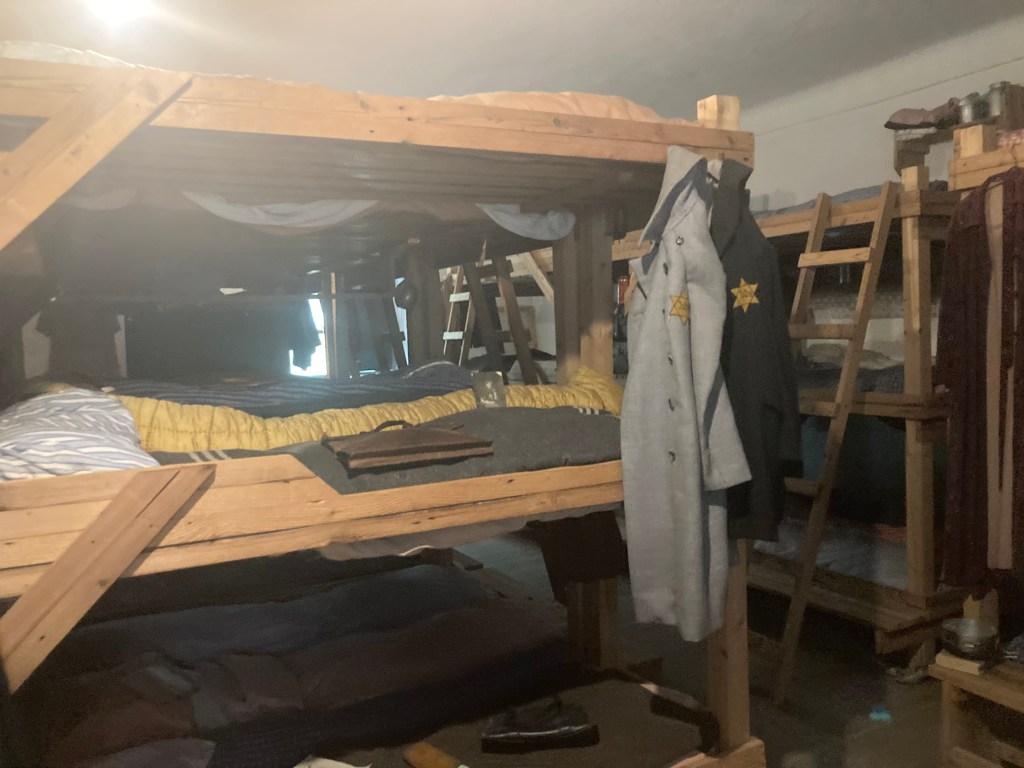
The fortress felt like going back into a time capsule because everything seemed to be in its original condition. It was in impressive condition given how long ago It was built. I really enjoyed walking through the tunnels, and it was interesting seeing the numerous portholes for defense. Walking into the former rooms of prisoners and seeing the wooden furniture and rusting sink made me vision the prisoners doing mundane things such as washing their face or sitting at the table. I honestly felt disrespectful being in those rooms. I had the same feeling when we saw what a typical unit in the Ghetto looked like; I felt invasive staring at and analyzing things that were once used by people. It felt wrong being in there especially since items were left out free for anyone to touch, as if it was an attraction and not a relic of someone’s life. But on the other end, it is also important as it shows the actual people behind the high casualty numbers. At the ending of the tour of the fortress, it was uneasy seeing the swimming pool that the prison director’s family used knowing what the purpose of the prison was.
In all, learning more about Terezin made me realize how intricate and complex the “Final Solution to the Jewish Question” was. We know that the goal was total extermination of the Jewish people, however instead of sending everyone straight to their deaths, the Nazis seemed to enjoy the mind games and the level of control they had over a population of people. They loved deciding whether someone’s fate would be straight to the concentration camp or a putting them through emotional turmoil in the Ghetto which just prolonged the inevitable for some people and gave them a false sense of hope when they were told they would be deported to “better place”. Many inhabitants of the Ghetto were creatives, and people who could influence and educate the public, but they were not exterminated straight away even though this was the goal of the Nazis.
Once again, I am glad that these sites are preserved and continue to honour the full truth of the victims by telling not only the horrors they faced but also, their personalities, their hobbies and just facts about them. I would recommend the museum in Terezin to people who want to be educated about the intricacy of the Holocaust whilst wanting to learn more about the characters of the people who went through it.
 HSF House Blogs