By Yves Santoy, University of Texas at Austin
Hi, my name is Yves Santoy! You pronounce my name as Eve, like Adam and Eve, and I’m currently attending the University of Texas at Austin. My major is Anthropology with a focus on Mesoamerican Archaeology, and my minor is in Art History with a focus on non-Western art. To pair with this, I am also getting a certificate in Museum Studies! In my free time, I love spending time with my friends, exploring nature, and as of late, I have recently gotten back into non-academic reading more in my free time. I am currently reading Agua Viva by Clarice Lispector, and it has slowly become one of my favorite books of all time! The book has no conformity and is that of a stream of consciousness, it is without any characters, storylines, narrators, messages or anything else. The book is essentially a new means of writing about herself, more deeply transforming her individual experience into a universal poetry. Other than reading, I am passionate about indigenous rights, studying the illicit trafficking of indigenous cultural heritage, and have focused a lot in my time as an undergraduate studying the epigraphic and iconographic styles in various regions of Mesoamerica and the Andes. I have narrowed my interests specifically to the influential Teotihuacan culture of central Mexico and their exchange with various Mesoamerican groups, specifically the Maya, during the Classic period and Post-Classic.
My research focuses on exploring the cultural and economic exchanges through trade routes between the ancient Maya civilization and Teotihuacan in Central Mexico at the archaeological site of Río Seco in Guatemala. With the help of my mentor and project advisor, Dr Mallory Matsutomo, an Assistant Professor of Religious Studies, I will employ geospatial analysis and conduct stratigraphic excavations where I aim to uncover the extent of Teotihuacan’s influence on the Maya by studying the site’s art and architectural styles. This site is situated in one of the region’s most efficient north-south transit routes, allowing travelers to move between central Mexico in the north and the lowlands of what is today El Salvador in the south while bypassing the arduous highland terrain of Chiapas and southwestern Guatemala and dense jungle of the Guatemalan lowlands Even today, the coast represents one of the most trafficked routes for migrants traveling from South and Central America to the US-Mexico border.
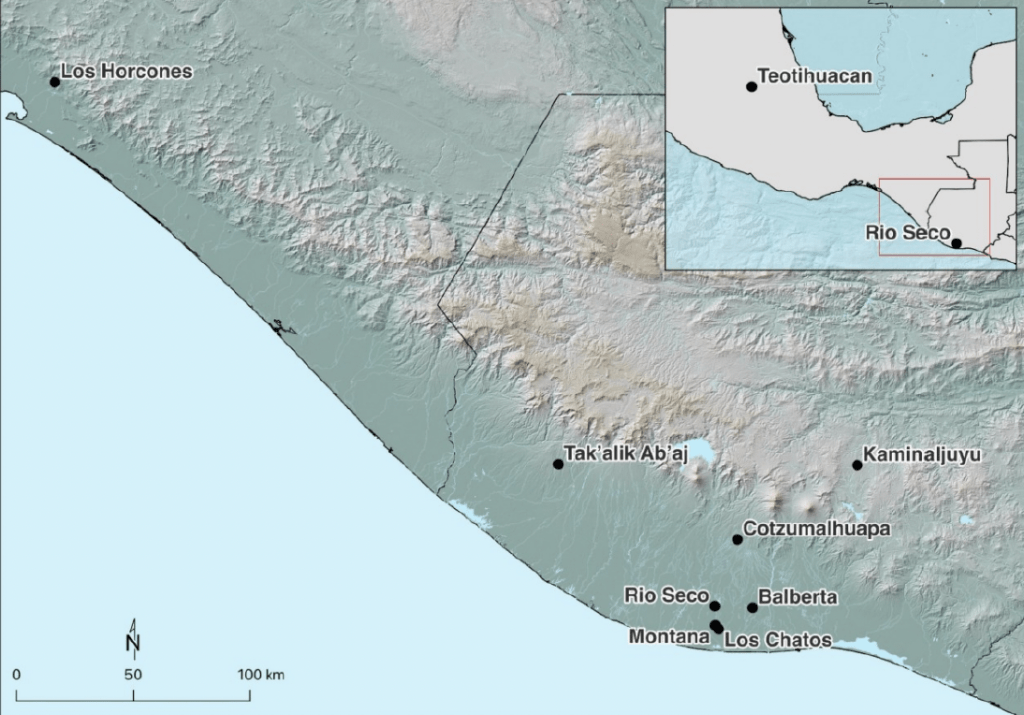
Figure 1. Map indicating the location of Río Seco and other sites mentioned in this proposal.
Receiving the Tyler Fellowship is a tremendous honor and will significantly impact my research by providing the resources to travel needed to conduct targeted excavations and artifact analysis. This support will not only advance our understanding of Mesoamerican exchange networks but also provide me with essential field experience in archaeological methods, preparing me for future research in ancient Mesoamerican interregional interactions, a subfield less studied than others. During my research trip in Guatemala, I’m most looking forward to learning more about excavation techniques and learning more about Mesoamerican archaeology as a whole. I have been to Guatemala last summer so being able to come back this summer is really great. I would like to get to explore more of the country and its cultures as I was in Antigua most of my time last summer.
 HSF House Blogs