By Landon Schumaker, University of Hawaiʻi at Mānoa
Hi! I’m from Chandler, Arizona—born and raised in the desert but always drawn to the ocean. I’m currently a student at the University of Hawaiʻi at Mānoa, majoring in marine biology with a minor in business administration. I’m also part of the Honors Program, where I’m working toward my honors certificate.
Outside of school, I love spending as much time outdoors and exploring as I can. Early in life, basketball played a major role in shaping who I am. At 6’7 and highly competitive, I found early success in the sport. I earned national recognition, traveled the country playing, and even was recruited by Lebron James and played with his son’s team. I was also in contact with multiple Division 1 programs discussing scholarship opportunities. However, starting in my sophomore year, I faced a series of three major injuries that ultimately ended my athletic career.
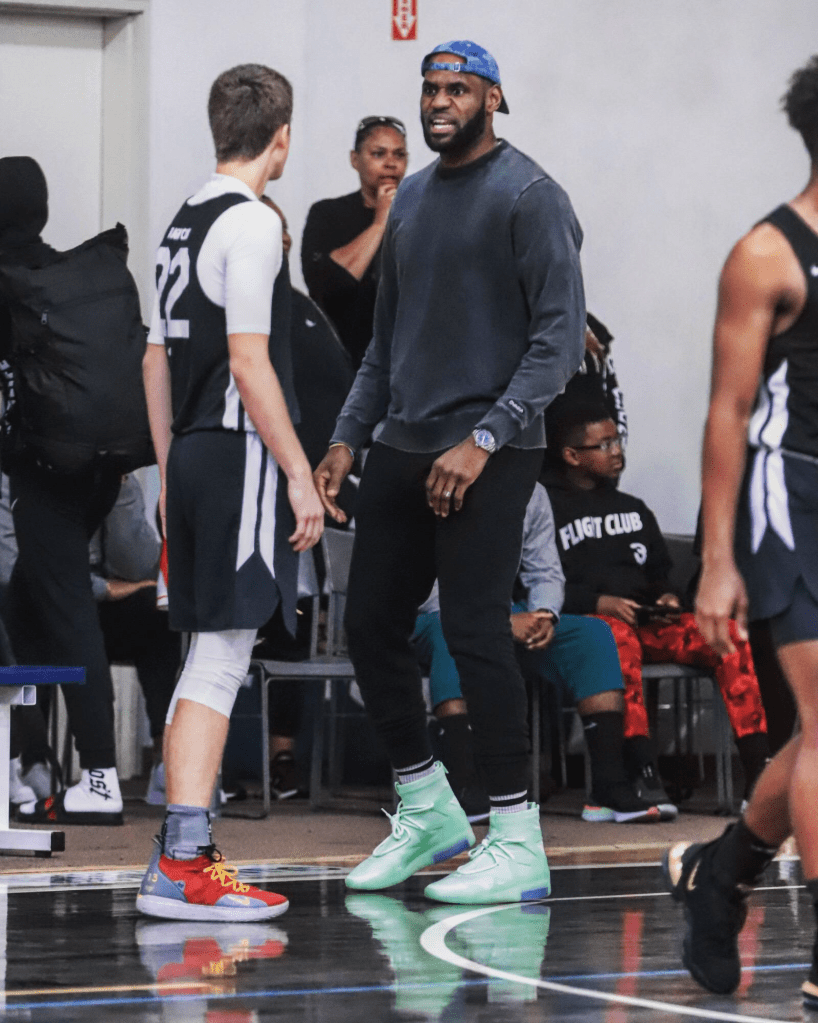
That period was difficult but gave me a new perspective on life. With basketball no longer defining my path, I was forced to reevaluate my purpose and ask myself what I truly wanted to do. It was during this time that my fascination with the ocean deepened. I’d always been curious about life in the deep sea. I asked questions like how can animals survive in such extreme environments? And what other secrets do the oceans still hold? That curiosity evolved into a passion, and I began planning for a career in research.
During this process, I uncovered multiple new interests that I may have never pursued otherwise. One of my greatest passions today is spearfishing. It is an intense, immersive experience that pushes you to think quickly, stay calm under pressure and tune into your surroundings. Another interest of mine is investing and economics. I spend a lot of my free time studying financial markets and trends, and I enjoy helping friends and family understand the basics of long-term investing. It is rewarding to combine analytical thinking with real-world strategy to research and invest in growing businesses.

Ultimately, I see myself as someone who is always growing. What started as a difficult detour away from sports became a turning point that opened the door to a new passion, new hobbies, and a new vision for my future. No matter if I’m diving in the ocean, analyzing a dataset, or researching a stock trend, I’ve always been driven by curiosity and the desire to keep learning!
This summer, I’ll be working on an exciting research project looking at the Nova Canton Trough, which is a region of the deep ocean that reaches hadal depths (deeper than 6000 meters). What makes this site so unique is that it’s not a trench like most hadal environments, it’s a trough, and up until recently, no one had ever biologically sampled a site like this at such depth and scale. The research project I’m involved in is using baited camera footage from 119 lander deployments, collected across a depth strata from about 3000 to 8000 meters. This data offers a rare window into life in one of the most remote and extreme habitats on Earth.
My research is focused on two core questions. First, what animals live in the Nova Canton Trough, and how do those communities change as depth increases? Second, with such a high-resolution sampling effort (deploying a lander roughly every 90 meters), can we evaluate whether this level of effort was necessary? In other words, was the environment over-sampled, under-sampled, or sampled just right? By answering this, we hope to improve the efficiency of deep-sea research going forward, especially considering the limited time and resources available during expeditions.

To tackle these questions, I’ll be conducting intense statistical analyses, identifying species observed in the footage, reviewing ecological literature, and working alongside experienced researchers in hadal ecology. I’ll be based in Perth, Australia, working at the Minderoo–University of Western Australia Deep-Sea Research Centre. I’ll be collaborating directly with Dr. Alan Jamieson, the founding director of the research centre, who is one of the world’s leading hadal scientists and a pioneer in the use of baited landers to explore the deepest parts of the ocean. Dr. Jamieson is an OBE (Officer of the Order of the British Empire) recipient and has led groundbreaking expeditions around the world. Learning from him this summer will be a great experience.
This will be my first time in Australia, and I’m thrilled, not only about the research itself but also about the chance to experience a new culture, environment, and community of scientists. What I’m most looking forward to is immersing myself in the research and gaining firsthand experience working with real hadal data. I’ve always been fascinated by the deep sea, by the unknown, the extreme conditions, and the way life has adapted to survive there. This project feels like the perfect opportunity to turn that fascination into hands-on scientific exploration.
At the same time, I know this summer will come with its challenges. I’ll be adjusting to a new lab, new methods, and a new team of collaborators, many of whom have years of experience in the field. There will be a learning curve, but I’m looking forward to it. I want to grow as a researcher, improve my technical and analytical skills, and absorb as much as I can from those around me. And of course, outside of the lab, I plan to make the most of my time in Australia, whether that’s exploring the coastline or the city, or learning about the wildlife, or just enjoying the experience of being somewhere completely new.
This summer marks a major step forward in my journey as a scientist, and I’m grateful for the opportunity to be part of something that pushes the boundaries of what we know about our planet’s last frontier, the deep sea.
 HSF House Blogs