By Ayden Lindsay
Hello, my name is Ayden Lindsay, I am from Rochester New York and I am currently attending Monroe Community College as a Cinema and Film Studies Major. Despite my dominant area of study being film I have recently found myself absolutely enamored by Photography, first as a creative outlet but now also in its rich history. In that regard I am incredibly lucky to be born where I was because Rochester NY is the epicenter of SO MUCH photo history. In the 1880s George Eastman produced the first widely available Roll Film cameras and made the art of photography more accessible to the general public. After his passing Eastmans Home was expanded out and those two buildings turned into a museum aptly named the “Eastman Museum” which is just a treasure trove of photo history.
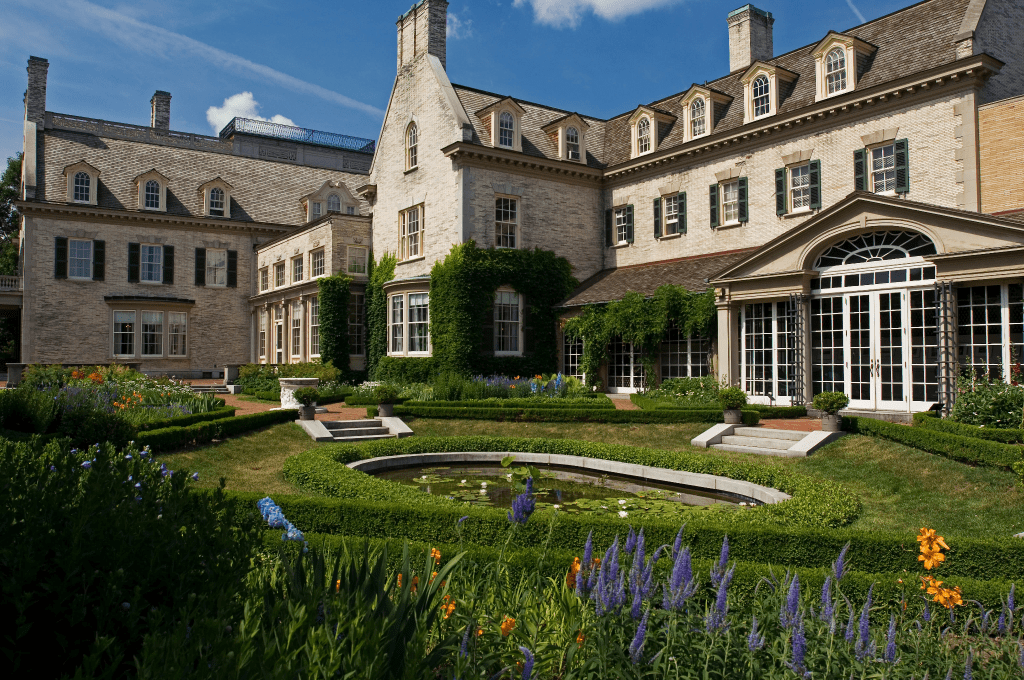
Earlier this year the Eastman Museum was exhibiting a series of photos they called “Life with Photographs: 75 Years of the Eastman Museum” which was a collection of pieces they had acquired over the course of the Eastman House running all presented together as a love letter to the long history of photography. Getting to see this Exhibition is what really sparked my interest in the field of study I’m pursuing for my research. They were exhibiting so many photos that I had learned about and had seen in photobooks, online, and via projector during lectures. I thought I knew those pieces of art fairly intimately, but I was shocked to see just how different they felt in person. Not just in a more spiritual sense but physically. How much darker the shadows were, how crisp the color gradients were, how different they felt printed at their full size compared to seeing them on a tiny phone screen. Comparing that to the images I had seen online and holding them up side by side with the prints the differences were staggering. So therein lies the question, is the future for photography digital or is print media here to stay?
This problem I think is multifaceted and can be tackled in two major disciplines. Presentation and Preservation. A vast swath of the research on the presentation side will be conducted in Paris, France. The first ever successful photograph was captured in 1826 in Burgundy, France.
Expectedly, in response France has become the de facto poster country for the artform. Paris in particular is filled to the brim with photo exhibits and museums, the Magnum Gallery, the Je De Paume, the Henri Cartier-Bresson Foundation, and the Maison Européenne de la Photographie just to name a few. The sheer volume of photographic work on display as prints will give me so many pieces to work with when comparing and contrasting them to digital reproductions one might find online. The Henri Cartier-Bresson Foundation in particular is of note because it is currently housing Richard Avedons “In The American West” , a series of photos which I would argue hinges to a degree on being printed. The series is composed of portraits from “The American West” which are printed huge, they’re meant to tower over onlookers. It’s mythologizing the mundane, the messy, the “lower class” people of America whom someone like Richard Avedon, who made a name for himself as a high end fashion photographer, would seemingly never even touch.
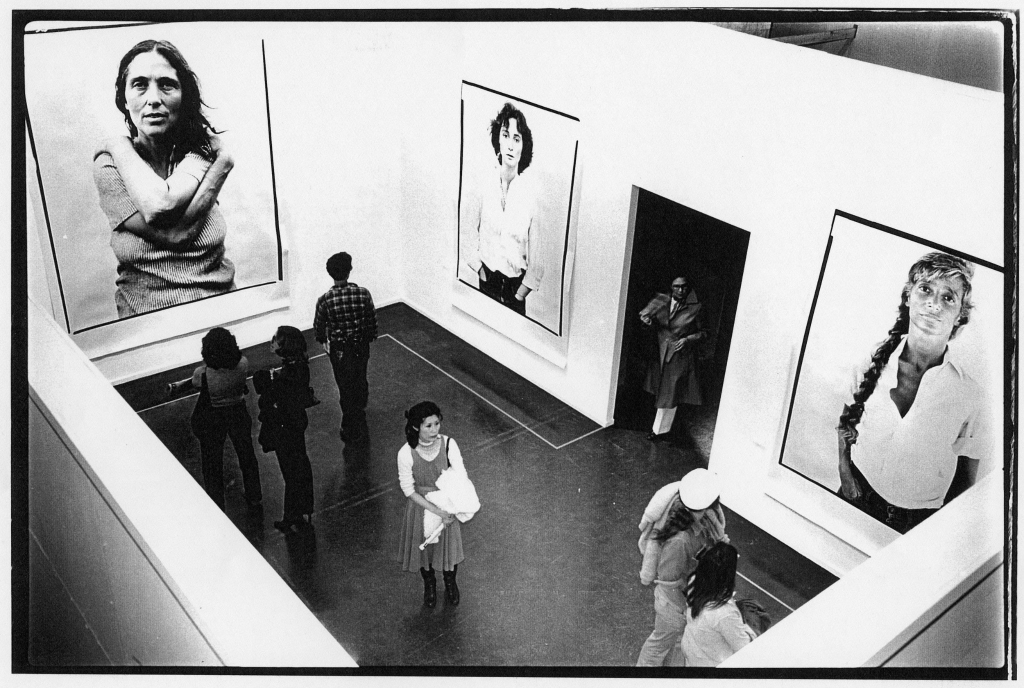
This nuance however is lost when you see “In The American West” on a phone screen, it no longer towers over you, you tower over it. These questions of presentation are everywhere. Like Penelope Umbricos “Sunsets From Flickr” which is meant to encompass an entire wall. Less overtly, the same could be said for works like Todd Hidos “Photos Of Empty Rooms” which were often exhibited with backlit frames, this gave the photos a very subtle glow to enhance the eerie emptiness which just can’t be reproduced digitally.
The other end of my research revolves less around the artistic merit of digital vs physical photography and more of a question of the long term preservation of photographic works. I want to compare and contrast the two mediums of photo storage and really interrogate them for their pros and cons. Digital storage seems like a no-brainer as we inexorably move towards digitization for all forms of media, but its seeming immutability is a common misconception. The average camera’s SD card will last up to 10 years in the perfect conditions. After 10 years at most, barring any number of problems in the interim, the SD card’s damage can lead to file corruption and any and all photos on said card will be lost. That is without question, a finite amount of time. The same could be said for any internal or external harddrive. The next more long term storage option would be purchasing and maintaining a website. Web Hosting however is not free and is also not a lifelong solution. All websites are susceptible to Link Rot, the web hoster might change URLs, or a domain names registration will expire and be free for other people to take, and even a mistake in HTML coding can render a link useless. Whatever information was stored on that site will become inaccessible as the link will inevitably redirect to 404 page. So, while digital evangelists swear by the infinite capabilities of the web it is, like everything else on earth, a finite resource.
All of this is not to say that physical preservation of photography is perfect either. Just about everything can damage a photo print. Heat, liquids of any kind, dust, UV light, finger prints, the regular old degradation of Lignin which is the material in paper that causes it to yellow with age and everything else you can imagine really. Not to mention just how much physical space photo archives can consume.
Truth be told, I don’t know if I have an answer to my own question yet, but that’s why I am excited beyond belief to take my research to the heart of photographic history where I can really sink teeth into the problem.
 HSF House Blogs